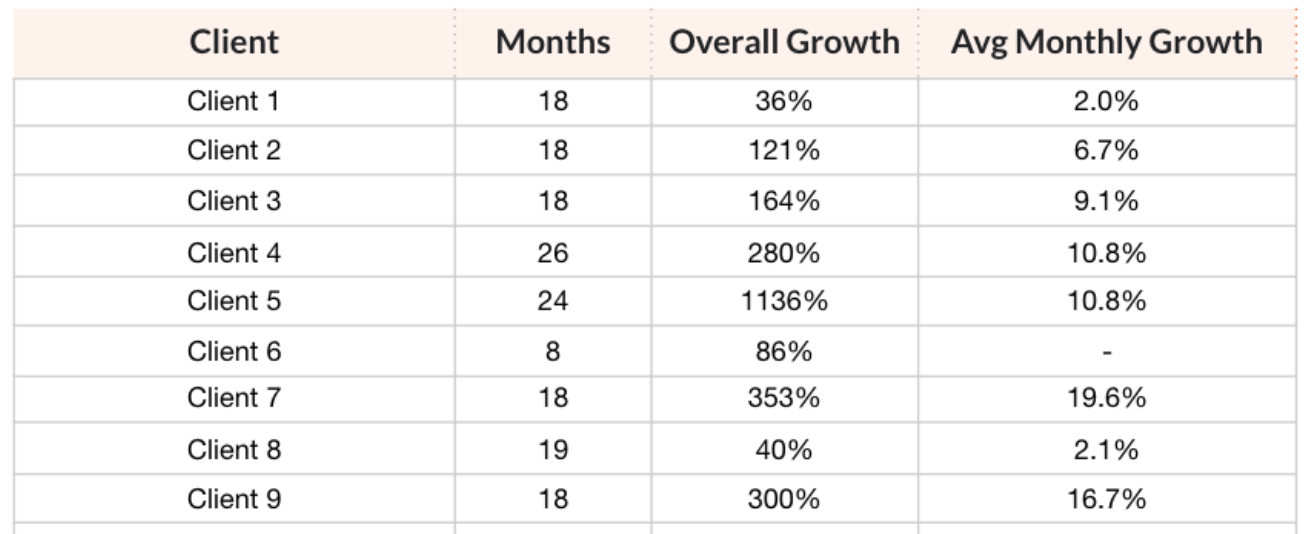
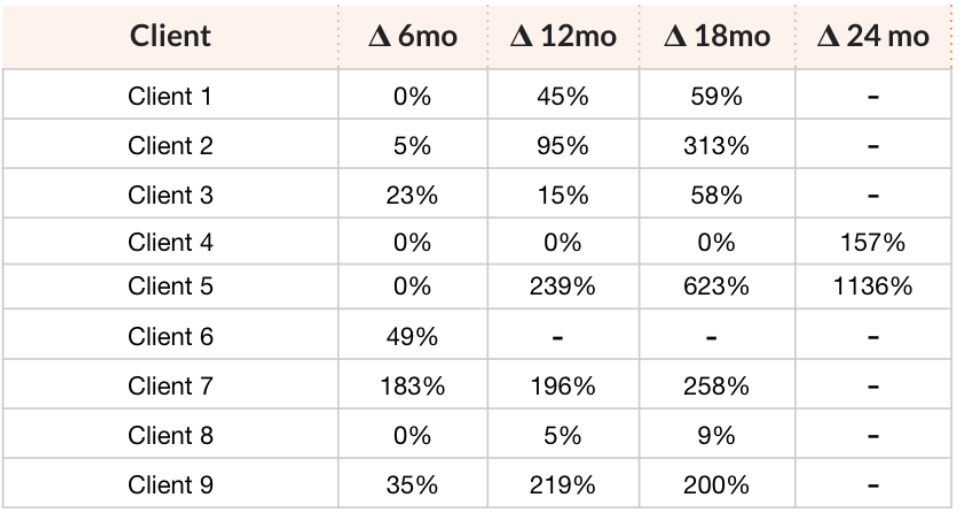
Meta Review of Clients' SEO Performance
Consistent SEO growth: insights from Flywheel’s meta performance review
130%
Median Total Growth
5x
Median Monthly Growth
151%
Reached Checkout
In 2021, when we celebrated Flywheel’s 3-year anniversary, our team took a step back and reviewed our results for our long-term SEO clients.
We originally did this to support our internal forecasting, but once we dug into the data, we found that there was a bigger story to share.


“We are proud to say that every single client showed substantial traffic growth. The results tell a clear story of the power of data-driven SEO and long-term thinking.”
MICHAEL
CEO, Flywheel Digital
About Our Clients
Our clients are both industry leaders and new entrants. Some were fairly new to SEO when they engaged, with only a few thousand sessions per month, and others had over 10 years of domain history. Although we serve all industries, our clients are primarily in SaaS, eCommerce, and education.
For most engagements, we started by creating an overall SEO strategy for 30-50 hours of work, then supported them with an ongoing engagement, ranging in size from 10 hours to 30 hours per month. We have only included clients that we’ve worked with on an ongoing basis for at least six months.
Data Review Process
Since we were relying on this data for forecasting, we took a rigorous approach to data collection and review:
- The raw data was first exported from the Google Analytics Organic Search Channel report, with month ‘0’ being the first month we began implementing changes for them.
- We broke down the number of hours per month we worked on the client, months spent, and changes in traffic at key intervals (6, 12, 18, 24 months).
- We used the median numbers instead of the mean to retain accuracy, as a few cases of explosive growth caused the averages to increase drastically.
- We reviewed both branded search changes and seasonality in our data collection using Google Search Console data. In most cases, however, neither factors were a major contributor in either direction for growth.
Our SEO Methodology
The goal of SEO is to grow qualified traffic to the site by increasing search engine rankings for key searches. We increase rankings by focusing on Google’s two principles: relevance and authority.
Each client has different needs and opportunities. Some need to focus on relevance building, while others on authority. In our initial project, we audit the sites for both principles, which helps us set the priorities. Then, our ongoing engagements are flexible, meaning in any given month, we’ll focus on the type of action that takes the high priority. Below, we’ve provided some short examples of how we execute on each:
Relevance Building is the practice of making websites easily readable to both search engines and users. We do this by making sure our clients have properly optimized keywords and are clear of any technical issues that would prevent them from ranking.
Strategy 1: Keyword Optimization
We identify the best keywords for the site by analyzing a combination of volume, search intent, and competitiveness. We then implement the strategy by updating the code and content.
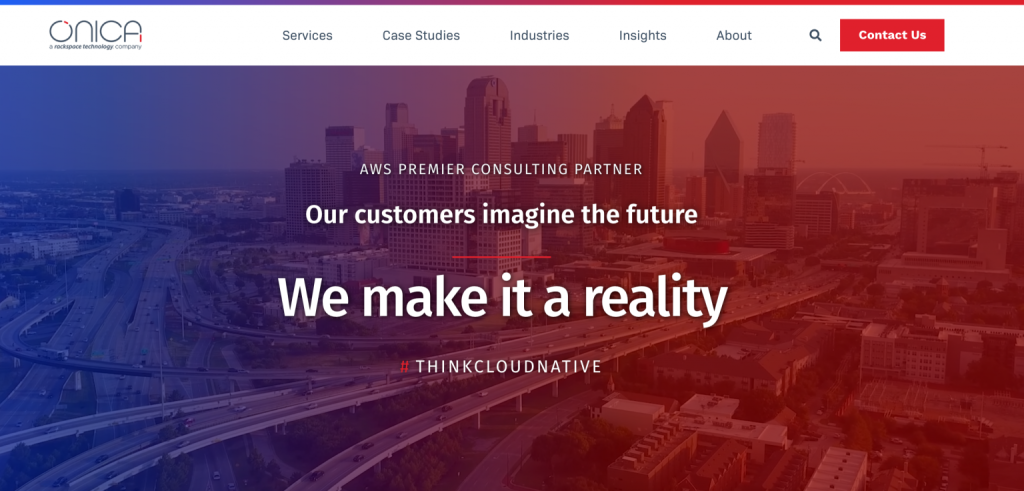
We did this for our client, Onica, leading to an increase in sessions by over 31% and a subsequent growth in pages-per-session by over 35%. Read more here.
Strategy 2: Obstacle Reduction
We perform a comprehensive audit for technical issues that may be holding the site back and provide detailed solutions. Findings can be related to internal linking, directives, UX issues, page speed, and more.
For example, for our client, Hitcase, we found their high-quality images were causing unusually high mobile load times. By changing how the images display on mobile, we were able to dramatically improve their page speed, and ultimately rankings. Read more here.

Authority Building
Authority Building is the practice of indicating to search engines and users that a site is the leader in its subject area. Flywheel achieves this by creating strategic, search-friendly content and generating new backlinks to our clients’ sites.
Strategy 1: Content Creation
We create a unified strategy for creating new content on a site. To do this, we research the best opportunities for both blogs and landing pages. We first analyze a combination of volume, search intent, and competitiveness, then create detailed briefs and either write them or work with our clients’ writers.
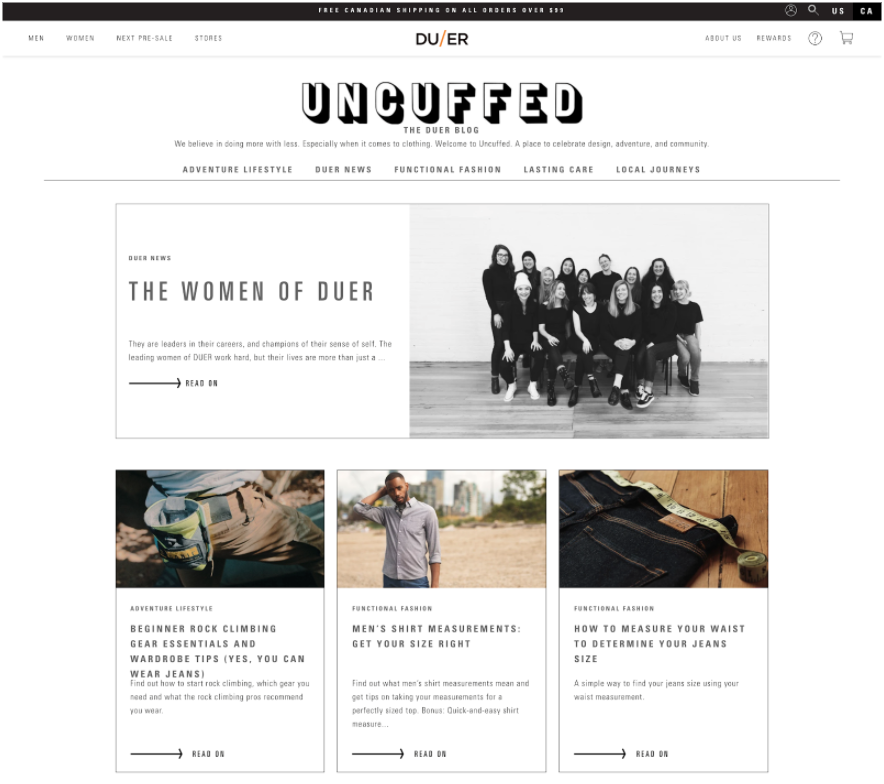
Since we began planning content for Lighthouse Labs, there have been nearly 20 thousand organic sessions to its blog, which translates to a 126% increase over the last six months. Flywheel produced similar results for DU/ER – the blog started from 0 and rose to 10,000 sessions per month in unbranded search traffic over the course of a year – and for Meal Kit Comparison, which scaled high-volume product content such as its review of Fresh Prep.
Strategy 2: Link Building
We identify and execute on opportunities to grow the number of backlinks to a domain. This includes quick wins, like broken URLs, and long-term strategies, such as content partnerships.
One example of this is reporter outreach through HARO (Help A Reporter Out), a platform that “connects journalists seeking expertise with sources who have that expertise.” We monitor these requests for our clients and respond when we can demonstrate their expertise. We also do this internally for Flywheel — see some of our backlinks here and here.
Results
After implementing our strategy for a median of 18 months, our clients saw an overall growth of 164% and a monthly growth of 11%.